

Spring cleaning gets overcomplicated fast. Most checklists try to turn your home into a project plan, and the result is predictable: you do a little, get overwhelmed, and the “reset” never really happens.
A better approach is to treat spring cleaning as a seasonal refresh. You are not trying to scrub every surface in a single weekend. You are trying to remove the slow build-up that routine cleaning misses: dust in edges, grease film in the kitchen, and grime that collects in bathrooms and on high-touch points.
If you do the right tasks in the right order, you can make the whole home feel lighter without burning out.
Start with the order that makes everything easier
Spring cleaning works best when you follow a simple sequence.
First, declutter just enough to access surfaces and floors. You do not need to reorganize your life. You just want clear counters, clear floors, and fewer objects that trap dust.
Second, go top down. Dust and debris fall. If you clean floors first, you will clean them twice.
Third, do “dry work” before “wet work”. Vacuuming, dusting, and dry debris removal come first. Wiping and mopping come last.
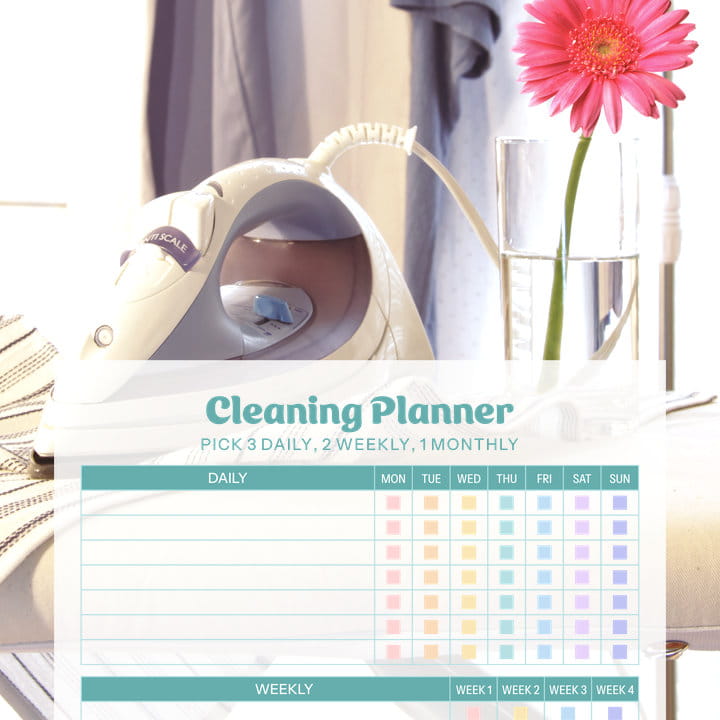
DWM Planner
Daily, weekly, monthly. Pick a few and repeat: download the DWM planner.
That order reduces rework and makes the results feel more dramatic.
The spring cleaning checklist that actually helps
Instead of an endless list, use a short checklist that hits high-impact areas.
Whole-home reset
Start with the tasks that affect how the whole home feels:
- Dust higher surfaces and neglected edges: fan blades, light fixtures, top shelves, vents, and corners
- Wipe baseboards in the main rooms, especially the areas you see from a distance: entry, living room, main hallway
- Vacuum thoroughly, including along edges and under the obvious furniture. Then mop hard floors
If you want to add windows, focus on the inside glass where fingerprints and haze show up most.
Bathroom reset
Bathrooms benefit most from moisture control and build-up removal:
- Clean shower walls and tub edges where soap scum forms
- Detail the sink and faucet area, including around handles
- Clean the toilet thoroughly and wipe the high-touch points
If mildew appears, treat it directly and make sure the room dries well between showers. Ventilation and drying habits prevent a lot of recurring issues.
Kitchen reset
The kitchen collects film and residue that routine wipes do not fully remove:
- Start with the sink area. A clean sink and drain area changes the feel of the kitchen immediately
- Wipe cabinet pulls, the refrigerator handle, and other touch points that get sticky over time
- Clean the stove area, especially the range hood area and any grease zones near the cooktop
If you have a refrigerator that needs attention, wipe obvious spills and clean the door seal area. Then, if you can safely access them, remove dust from vents or coils according to your appliance manual.
Targeted tips for the tasks people avoid
Some spring cleaning tasks feel annoying, but they are high impact when done once or twice a year.
Microwave
Steam cleaning works because it softens dried splatter.
Heat a bowl of water until it steams, let it sit closed for a minute or two, then wipe. Finish with a clean damp cloth and dry it so it does not smell stale.
Refrigerator
A refrigerator feels “clean” when spills are handled and odors are gone.
Wipe shelves and drawers as needed, clean the rubber door seal, and check for expired food that is quietly creating smells.
If you want the maintenance win, keep airflow in mind. Many fridges have vents or coils that collect dust. Follow your model’s guidance for safe cleaning.
Stove and oven
A cleaner stove is not just cosmetic. It prevents smoke, reduces odors, and makes cooking less irritating.
Focus on the areas you touch and see: knobs, front panels, cooktop surface, and the nearby backsplash zone.
If you deep clean the oven, follow the manufacturer’s advice. Some self-clean cycles create strong fumes and are not ideal for every household.
Sinks and drains
Sinks look clean long before they are truly clean.
Clean the basin and faucet, then give attention to the drain area. If you like the baking soda and vinegar method, use it as a deodorizing routine, not as a cure-all for serious drain issues. Avoid mixing chemicals, and use ventilation if you disinfect.
Countertops and stone care
Stone countertops can be beautiful and also unforgiving.
If your counters are natural stone and you reseal them, follow the sealer instructions carefully and test water beading to understand whether sealing is needed. If you are unsure what material you have, treat it gently and avoid harsh acids.
Dishwasher
A dishwasher often smells because of trapped debris.
Clean any accessible filter or food trap area according to your model’s instructions, wipe the door seal, then run a cycle. Many people use vinegar for deodorizing, but always check your manufacturer guidance before making it a routine.

Cleaning Checklist
A simple checklist you can print and reuse: download the checklist.
Make the spring reset last
Spring cleaning is satisfying, but the real win is making it last.
After the reset, keep two habits:
- A short daily reset that keeps counters and floors from compounding
- A weekly rhythm that rotates bathrooms, floors, and kitchen detail
When those two habits exist, spring cleaning becomes lighter each year instead of harder.
Quick questions
Explore Seasonal & Deep Cleaning for focused resets that make a real difference. Subscribe to get new seasonal guides when they’re ready.