

Back-to-school is a reset point for the whole house.
Summer routines are looser, the door opens a hundred times a day, and clutter quietly multiplies in places you barely notice until September arrives. When school starts, you suddenly want mornings to run smoother, the kitchen to feel under control, and the entry to stop looking like a storage unit.
You don’t need to deep clean everything. You need a focused fall reset that sets you up for the next few months.
Start with the one rule that saves time
Back-to-school cleaning works best when you do two things first:
- Clear clutter that blocks surfaces and floors.
- Set up simple systems that prevent the same mess from returning.
Cleaning is easier when the home has a few predictable homes for daily items.
1) Do a fast clutter sweep in the high-traffic zones
Start where school life actually lands, because that’s where the mess tends to pile up fastest. Begin with the entry and hallway, then move to the kitchen counter and dining table, and finish with the one living-room “hot spot” that collects everything.
Use a basket and do one pass. Trash goes out, donations go into one bag or box, and everything else can be put away later. Trash goes out. Donations go into one bag or box. Everything else gets put away later.
If you have kids, involve them with one simple rule: anything that is not used gets donated, stored, or recycled. Keep it practical.
2) Create a “school drop zone”
This is the easiest way to prevent daily chaos.
Pick one spot near the door and make it the landing area for daily school items – backpacks, shoes, lunch bags, forms, and keys. You don’t need fancy storage. A couple of hooks and a small basket for papers is enough.
If you want a simple rule kids can repeat without reminders, try: Backpack, shoes, lunch bag, then play.
3) Reset the kitchen where it matters
Back-to-school brings snacks, lunch prep, and more dishes. A kitchen reset is less about “sparkle” and more about flow.
Do the high-impact tasks that make the kitchen feel calm again. Clear and wipe counters, clean the sink area thoroughly, and wipe the high-touch spots you hit all day (the fridge handle, microwave buttons, and the dishwasher front). If you have time, toss expired food and wipe obvious spills inside the fridge.
If odors are an issue, go after the real sources: trash, the sink drain area, damp sponges, and old food. Swapping sponges and washing dish cloths often makes the biggest difference.
4) Floors: handle the entry path first
Fall means more tracked-in dirt.
Instead of trying to do every room, clean the main path your family uses most: the entry, hallway, kitchen, and the main living area. A thorough vacuum along edges plus a quick mop on hard floors usually makes the whole home feel cleaner.
If your rugs and upholstery feel tired, start simple: vacuum thoroughly (including under cushions) and spot-clean what you can see.
5) Make “shoes off” easy, not strict
A no-shoes home is one of the easiest ways to reduce tracked-in dirt, but it only works when it’s convenient. Put a mat outside and a second mat inside, keep a simple shoe rack or bin by the door, and make the “shoes off” moment effortless.
The goal is less grit on floors, not policing.
6) Give kids a simple cleaning rhythm
Chores don’t need to be complicated. One short weekly room reset can prevent the slow build-up that turns bedrooms into a project.
A simple rhythm works well: clothes into the hamper, toys into bins, clear the floor, and wipe a desk or nightstand if it’s sticky – then you do the vacuum pass.
Make it predictable by choosing the same day each week, keeping it short, and using a timer if it helps.
If you use rewards, keep them small and immediate. The habit matters more than the prize.
7) Handle the “unfinished projects” that sabotage routines
Back-to-school is also a good time to fix the small problems that quietly create mess – a loose hook, a broken bin, a missing label, a drawer that won’t close, or a dead lightbulb in the entry. Pick one or two and finish them. Done is better than perfect.
Keep it going with a tiny weekly plan
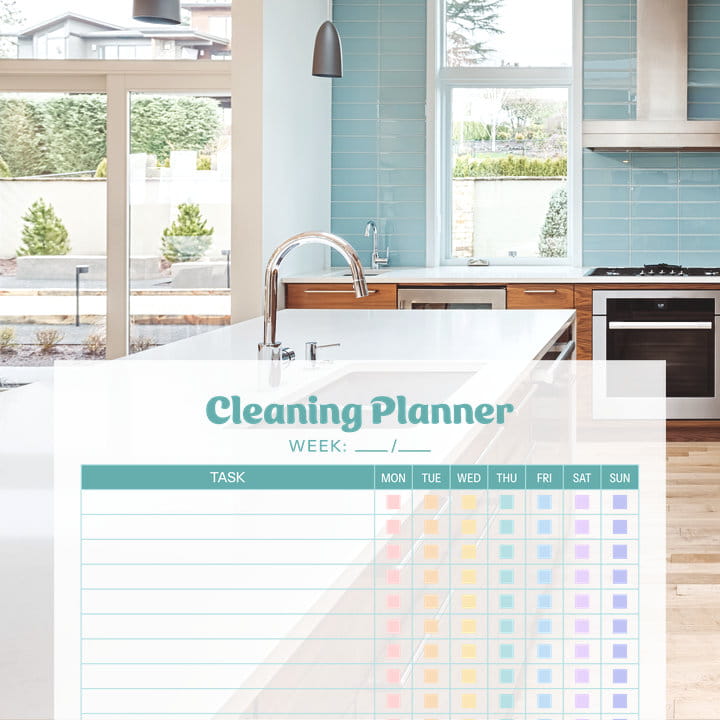
Weekly Planner
Plan the week, then do the next small task: download the weekly planner.
Once the reset is done, you only need a small routine to keep things working.
A quick daily reset (drop zone, kitchen counter, and a fast pickup) keeps clutter from compounding. Then choose one weekly focus – floors in the main path and a simple bathroom sink/toilet reset are usually enough.
That’s enough for most families to stay near baseline during the school year.
Next step
If you want a ready-made checklist you can print and reuse, grab our cleaning printables here.