
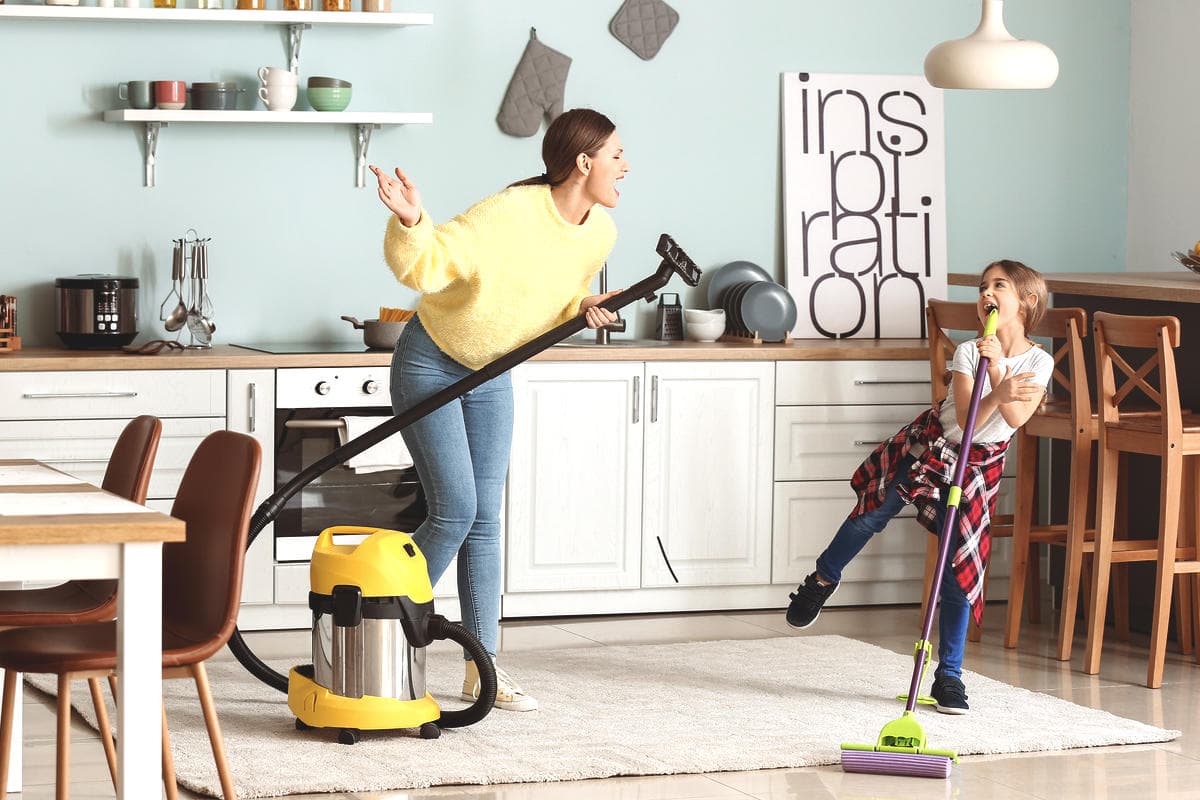
New Year motivation is real – and also short-lived.
That is why the best “cleaning challenge” is not a heroic, all-day deep clean. It is a short plan you can actually finish. The goal is a reset that makes your home feel lighter, then a routine that keeps it from drifting back.
This challenge is built around one principle: small wins, daily.
You will focus on clutter first, then floors and high-impact zones, then one or two unfinished household tasks that have been quietly nagging at you.
Before you start: do a 10-minute walkthrough
Walk through your home with your phone and take quick notes. Do not start cleaning yet.
Look for three categories:
- Clutter hot spots (entry, kitchen counter, dining table, the chair that collects everything)
- High-friction cleaning zones (bathroom, kitchen sink area, floors)
- Unfinished “small projects” (detector batteries, loose handle, a missing hook, a drawer that never closes)
Your goal is to pick tasks you can finish. A challenge only works when it ends.
The rules of the challenge
These rules keep it realistic.
- Keep daily tasks to 15–30 minutes
- Do clutter before cleaning. You cannot clean a surface you cannot reach
- Do not try to organize everything. Use a simple “put away, donate, trash” approach
When you feel stuck, return to the basics: bathrooms, kitchen, floors.
A simple 14-day cleaning challenge
You can start any day of the year. The point is momentum.
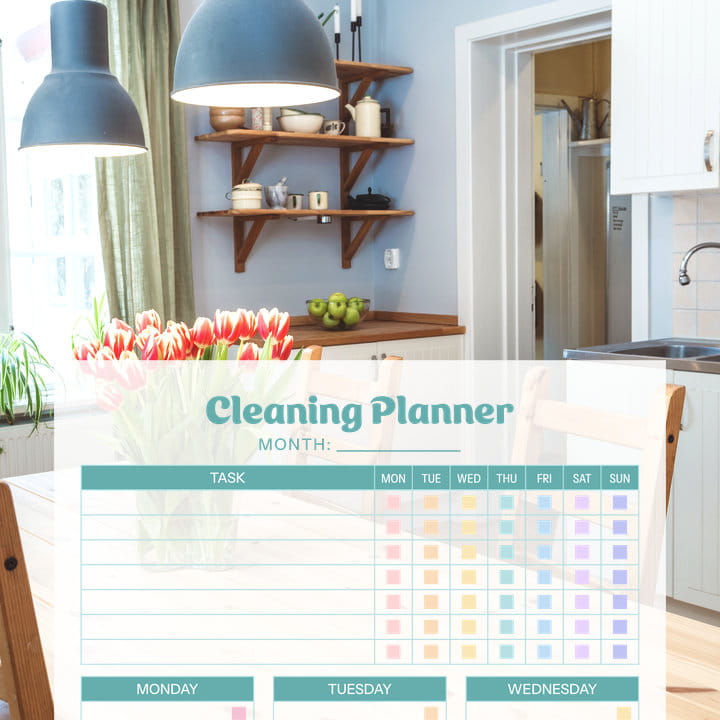
Monthly Planner
Plan the month, then keep the week simple: download the monthly planner.
Days 1–3: clear clutter that blocks everything
Day 1: Entry and surfaces Clear the entry zone and the main surfaces guests see first. Put shoes where they belong, gather mail, and remove anything that does not live there.
Day 2: Kitchen counter reset Clear counters and the sink area. Create one “home” for daily items (coffee, keys, vitamins) and remove the rest.
Day 3: Living room hot spot Pick one clutter magnet. Do a fast pickup using a basket. Put away what you can, and create a small donate pile.
Days 4–7: floors and the “makes the house feel clean” tasks
Day 4: Floors in main paths Vacuum or sweep the entry, living room, and hallway. Do edges and corners. If you mop, do it after vacuuming.
Day 5: Bathroom reset Clean the toilet, sink, mirror, and a quick shower/tub wipe. Put out a fresh towel and make sure soap is visible.
Day 6: Kitchen reset Clean the sink and wipe counters. Wipe the stovetop front and the fridge handle. Take out trash.
Day 7: Bedroom baseline Change sheets, clear nightstand clutter, and do a quick floor pass.
Days 8–11: storage that prevents clutter from returning
The goal is not to buy containers. The goal is to give items a predictable home.
Day 8: One drawer or shelf Pick one drawer or shelf that is always messy. Empty it, remove trash, keep what you use, and put the rest into a donate box.
Day 9: Kids’ zone or family zone Pick one small area: backpack station, toy bin, or homework spot. Reduce what does not belong and make the “put away” step easy.
Day 10: Linen or towel zone Fold, reduce, and make space. Keep only what you realistically use.
Day 11: Paper and small items Handle mail, manuals, random papers. Keep a simple “action folder” and recycle the rest.
Days 12–14: finish what you have been avoiding
These are the tasks that make a home feel “together”.
Day 12: One unfinished project Choose a small, high-impact fix: change a detector battery, tighten a handle, add a hook, replace a lightbulb.
Day 13: Second unfinished project (optional) Only if it is truly small. If it is not small, break it into a first step and stop there.
Day 14: Final walkthrough and reset routine Do a quick walkthrough. Notice what still feels off.
Then choose a maintenance plan you can repeat:
- A 10-minute daily reset
- One weekly focus (bathroom, floors, or kitchen detail)
That is how the reset lasts.
Make it stick: the minimum routine
After the challenge, do not try to keep doing “challenge mode”.
Use the minimum routine:
- Daily: 10-minute reset (surfaces and clutter hot spots)
- Weekly: one deeper task (bathroom, floors, or kitchen detail)
When you do that, your home stays near baseline – and you stop needing dramatic resets.
Quick answers
Explore Cleaning Routines & Schedules for systems you can actually keep up with. Subscribe to get new routines and planners as they’re published.